
Commercial kitchen equipment takes a beating. From early-morning prep through the dinner rush, ovens, fryers, refrigeration systems, dishmachines, and other essential equipment are expected to perform day after day.
When something breaks, the first instinct is often simple: repair it and get back to business. But at some point, continuing to repair aging equipment can cost more than replacing it.
So how do you know when you’ve reached that point? Here are six signs it may be time to consider replacement.
1. Service Calls Are Becoming More Frequent
An occasional repair is part of owning commercial kitchen equipment. Repeated repairs are different.
If the same unit requires service every few months—or you’re continually fixing one component after another—the cumulative cost deserves a closer look. Review what you’ve spent on the equipment over the past year or two rather than evaluating each repair individually.
2. The Equipment Is Approaching the End of Its Expected Life
Age alone doesn’t mean a piece of equipment needs to be replaced. A well-maintained unit may continue performing reliably for years.
However, age should become part of the decision when it’s combined with increasing repair costs, declining performance, or difficulty sourcing replacement parts.
3. Performance Isn’t What It Used to Be
Maybe a refrigerator takes longer to recover its temperature. An oven isn’t heating as evenly. A dishmachine isn’t keeping up during peak periods.
Gradual performance changes are easy to overlook because employees adapt to them. But declining performance can eventually affect productivity, consistency, and the overall operation of your kitchen.
4. Operating Costs Are Increasing
The purchase price isn’t the only cost associated with commercial kitchen equipment.
Older equipment may consume more energy or water than newer alternatives. It may also require more employee attention to produce the same results. When evaluating repair versus replacement, consider the total cost of keeping the equipment operating—not just the price of the next service call.
5. Downtime Is Affecting Your Business
A repair doesn’t only cost what appears on the invoice.
What happens when a critical refrigerator, fryer, oven, or dish machine goes down during service? Lost production, menu changes, employee downtime, emergency service calls, and unhappy customers can quickly make equipment failure much more expensive.
If one unreliable unit is becoming a recurring operational problem, replacement may provide value beyond lower repair costs.
6. Your Technician Keeps Warning You
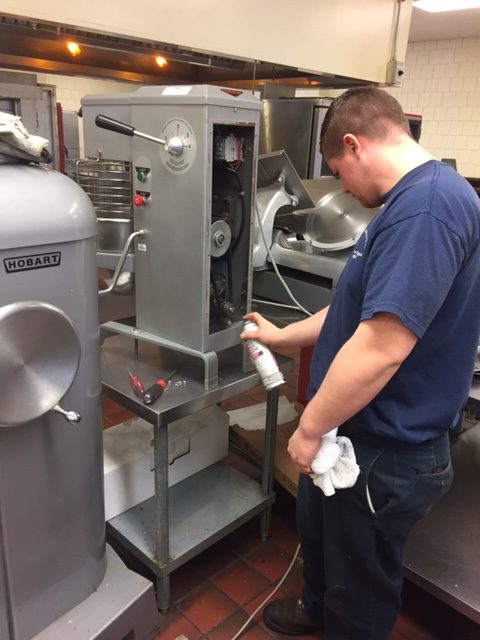
A qualified commercial kitchen service technician sees things operators may not.
If your technician is repeatedly identifying deteriorating components, increasing repair costs, or reliability concerns, pay attention. A good service partner can help you understand whether another repair is worthwhile or whether you’re simply delaying an inevitable replacement.
Make the Decision Before the Equipment Makes It for You
The best time to replace commercial kitchen equipment isn’t necessarily when it stops working completely. Ideally, it’s when the numbers and equipment condition tell you that replacement has become the smarter long-term investment.
Tracking equipment age, condition, service history, repair expenses, and performance can make that decision much easier.
Joe Warren & Sons can help you evaluate your commercial kitchen equipment and develop a practical repair, replacement, and maintenance strategy—before an unexpected breakdown forces the decision.