When most people think about commercial equipment service, they picture a technician arriving after something has already broken. A refrigerator isn’t cooling, an oven won’t heat, or an ice machine has stopped producing ice. While emergency service is an important part of keeping commercial kitchens running, it’s only one piece of the puzzle.
The most successful restaurants, healthcare facilities, schools, supermarkets, and foodservice operations take a different approach. They invest in planned maintenance to identify potential problems before they become costly repairs or unexpected downtime.
But what actually happens during a planned maintenance visit?
Many customers are surprised to learn that these visits involve far more than simply cleaning equipment or checking a few temperatures. A thorough planned maintenance program is a detailed inspection of your equipment’s overall health, performance, and efficiency. It’s designed to keep your operation running smoothly while helping you avoid interruptions that can impact food quality, customer service, and your bottom line.
It Starts With a Complete Equipment Evaluation
Every piece of commercial food equipment experiences wear over time. Refrigeration systems run continuously. Cooking equipment is exposed to high temperatures every day. Dish machines cycle through thousands of washes each year.
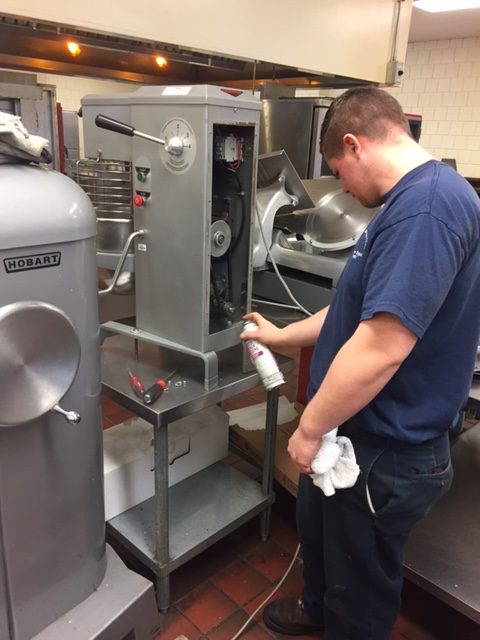
During a planned maintenance visit, technicians begin by evaluating the overall condition of each piece of equipment.
Rather than focusing only on obvious problems, they look for subtle signs of wear that may indicate future issues. This allows small concerns to be addressed before they develop into expensive failures.
Refrigeration Systems Receive a Thorough Inspection
Commercial refrigeration equipment is often the hardest-working equipment in any facility.
Walk-in coolers, freezers, prep tables, reach-in refrigerators, and ice machines operate around the clock to protect valuable inventory.
During a planned maintenance visit, technicians typically inspect:
- Refrigeration temperatures
- Compressor performance
- Condenser and evaporator coils
- Refrigerant pressures
- Fan motors
- Electrical components
- Door gaskets and hinges
- Drain lines
- Airflow throughout the system
Even a small issue—such as a worn door gasket or dirty condenser coil—can reduce efficiency and force equipment to work harder than necessary.
Identifying these issues early helps improve performance while reducing energy consumption and unnecessary wear.
Cooking Equipment Is Evaluated for Safety and Performance
Cooking equipment must do more than simply turn on. It needs to heat consistently, operate safely, and perform reliably during the busiest parts of the day.
Depending on the equipment, technicians may inspect:
- Gas connections
- Burner performance
- Heating elements
- Ignition systems
- Thermostats
- Pilot assemblies
- Temperature calibration
- Safety controls
- Electrical wiring
Proper calibration is especially important. Equipment operating outside its intended temperature range can affect food quality, increase cooking times, and create unnecessary stress on components.
Dish Machines Need Attention Too
Commercial dish machines play an important role in food safety and operational efficiency.
During planned maintenance, technicians inspect items such as:
- Wash temperatures
- Final rinse temperatures
- Chemical dispensing systems
- Spray arms
- Water pressure
- Pumps
- Heating elements
- Filters
- Drain systems
Regular inspections help ensure dishes are being properly cleaned while reducing unnecessary downtime during meal service.
Electrical Components Are Carefully Checked
Many equipment failures begin with something that isn’t immediately visible.
Loose electrical connections, worn contactors, deteriorating wiring, or aging switches may continue functioning for weeks—or even months—before suddenly failing.
Technicians inspect these components for signs of excessive heat, corrosion, vibration, or wear.
Correcting small electrical issues early often prevents much larger repairs later.
Performance Is Measured—Not Guessed
One of the biggest advantages of planned maintenance is that technicians don’t simply look at equipment—they measure how it’s performing.
They compare temperatures, pressures, amperage, airflow, operating cycles, and other performance indicators against manufacturer specifications.
These measurements can reveal developing problems long before they become noticeable during daily operation.
Small Adjustments Make a Big Difference
Not every planned maintenance visit results in a repair.
In many cases, technicians perform minor adjustments that improve equipment performance immediately.
Examples include:
- Tightening loose hardware
- Adjusting door alignment
- Cleaning sensors
- Lubricating moving components
- Replacing worn gaskets
- Correcting airflow restrictions
- Calibrating thermostats
These seemingly small improvements often extend equipment life while helping reduce energy consumption.
You’ll Receive Valuable Insight
One benefit many customers appreciate is the conversation that happens after the inspection.
Rather than simply completing a checklist and leaving, experienced technicians explain:
- Equipment that is performing well
- Components showing normal wear
- Areas to monitor over time
- Recommended repairs
- Opportunities to improve efficiency
This information helps facility managers make informed maintenance decisions instead of reacting to unexpected failures.
Planned Maintenance Is About Protecting Your Business
The real value of planned maintenance isn’t simply preventing breakdowns.
It’s protecting everything that depends on your equipment.
Reliable refrigeration protects food inventory.
Well-maintained cooking equipment keeps kitchens operating during peak service.
Efficient dish machines support sanitation and food safety.
Consistent equipment performance helps employees work more efficiently while providing a better experience for customers, patients, students, or guests.
Instead of waiting for problems to interrupt operations, planned maintenance creates confidence that your equipment is ready to perform every day.
A Smarter Approach with Joe Warren & Son
At Joe Warren & Son, we believe planned maintenance is one of the best investments a foodservice operation can make. Our technicians take the time to inspect equipment thoroughly, identify developing issues, and recommend practical solutions that help extend equipment life and improve reliability.
Whether you operate a restaurant, healthcare facility, school cafeteria, supermarket, or institutional kitchen, our planned maintenance programs are designed to keep your equipment operating efficiently while reducing unexpected downtime and costly emergency repairs.
A planned maintenance visit isn’t just another service call—it’s a proactive strategy for protecting your equipment, controlling operating costs, and helping your business perform at its best every day.